

Programs Overview
Past Events
ROCK Weekend
Upcoming Events
Blog
Resource Hub
Sponsor
Volunteer
Partner with Us
Ways to Support
Share Your Story
Join Our Network
Our Impact
Why BIPOC?
Our Approach
Who We Are
Common Questions
Community Care Collaborative
ROCK it Wellness
The AIP BIPOC Community
The AIP BIPOC Roundtable
Powering Advocacy


Why This Conversation Matters
Imagine waking up exhausted, even after a full night’s sleep, your body aching, your mind foggy, and simple things feeling harder than they should.
You tell yourself it’s fine, that you just need to push through, so you do, through meetings, responsibilities, and expectations that don’t pause just because your body is struggling.
You adjust, compensate, and keep showing up until one day you can’t.
What felt manageable becomes impossible to overlook.
For many people living with autoimmune disease, that’s the pattern, pushing through symptoms, downplaying what the body is signaling, and continuing to show up until the body pushes back in a way that can no longer be dismissed.
And when it does, it’s often called a flare.
Key Takeaways
- A flare is information, not failure: your body is responding, not breaking
- The body is not the enemy: symptoms are communication, not punishment
- The push and crash cycle keeps people stuck: pushing leads to deeper flares and longer recovery
- Your worth is not tied to productivity: rest does not reduce your value
- Community changes the experience: shared understanding reduces isolation and builds clarity
The Cultural and Generational Weight
For many people of color, this pressure is not just personal, it’s cultural and generational. We are often taught we have to be smarter, work harder, show up better to be valued in spaces where we are already underestimated.
That expectation shows up in the body. It turns into overwork, pushing past limits, and tying worth to performance. And when the body can’t keep up, it’s met with guilt instead of understanding.
Over time, that cycle contributes to higher stress, increased inflammation, and a greater burden of chronic disease. It becomes a loop, push, crash, recover, repeat.
Breaking that cycle starts with reframing what a FLARE means, and what WORTH actually is.
Autoimmune diseases are often misunderstood, especially in underserved communities where delays in diagnosis, dismissal in care, and limited access are common.
That reality shapes how people experience illness, not just physically, but in how they see themselves.
And when worth is tied to performance, flares don’t just disrupt the body, they challenge identity.
Even in the middle of a flare, even when your body slows you down, even when you can’t show up the way you’re expected to, you are still worthy.
This is what made creating a space like this necessary.
Before getting into what was shared during the workshop, it’s important to understand what a flare actually is and why it matters.
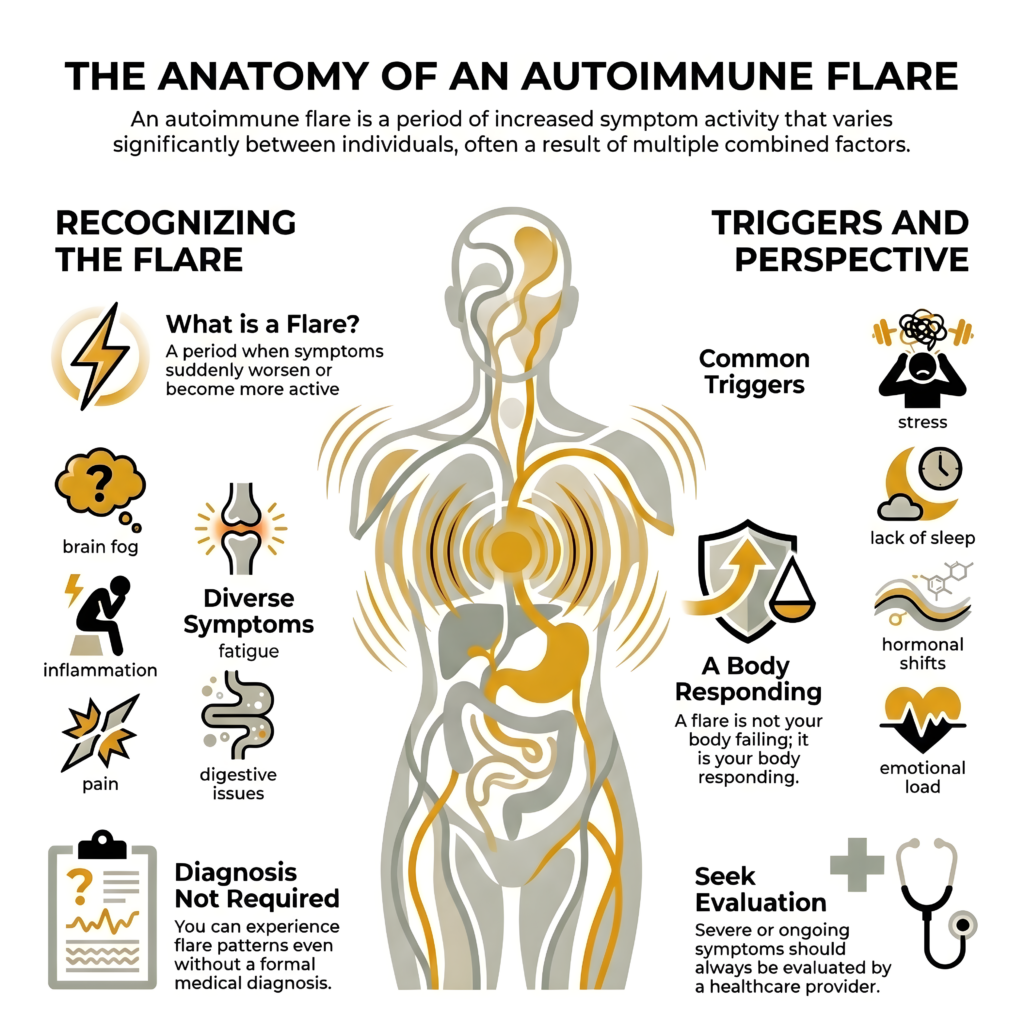
What is an Autoimmune Flare?
A flare, or flare-up, is a period when symptoms suddenly worsen or become more active.
It can show up as fatigue, brain fog, pain, inflammation, digestive issues, or changes in heart rate.
Flares don’t look the same for everyone. They are rarely caused by one thing.
Stress, lack of sleep, hormonal shifts, environmental exposures, and emotional load all play a role.
A flare is not your body failing.
It is your body responding.
You can experience flare-like patterns without a formal diagnosis. Many people notice cycles of worsening symptoms before they are ever diagnosed.
That said, ongoing or severe symptoms should be evaluated by a healthcare provider. A flare explains a pattern, but it is not a diagnosis.
Creating Space for a Different Conversation
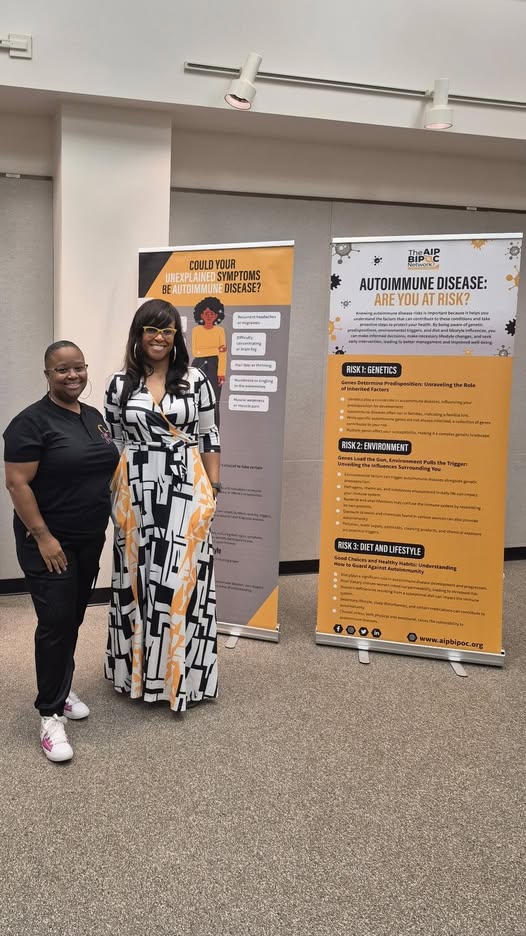
On April 18, 2026, The AIP BIPOC Network partnered with Positive Express to host Worthy Beyond the Flare.
This wasn’t just a workshop. It was a space to understand what the body is communicating, recognize patterns behind flares, and start shifting how we respond.
The focus was simple and direct:
🟡 Understand what a flare is actually signaling
🟡 Identify patterns instead of blaming yourself
🟡 Learn tools to respond earlier, not just recover later
🟡 Separate your worth from what your body can produce on any given day
This work sits at the intersection of lived experience, prevention, and access. It is not just about managing symptoms. It is about understanding the body and navigating the systems around it.
If you’ve ever pushed through symptoms, questioned your body, or felt like you had to prove your worth despite what you’re navigating, this is the kind of space designed for you.
Reframing the Conversation
The workshop opened with Tosha Dearbone of Positive Express, setting the tone for everything that followed.
Positive Express centers emotional wellness and trauma-informed practices. Tosha’s work emphasizes grounding, self-awareness, and practical tools that help people better understand how stress and lived experience can show up in the body.
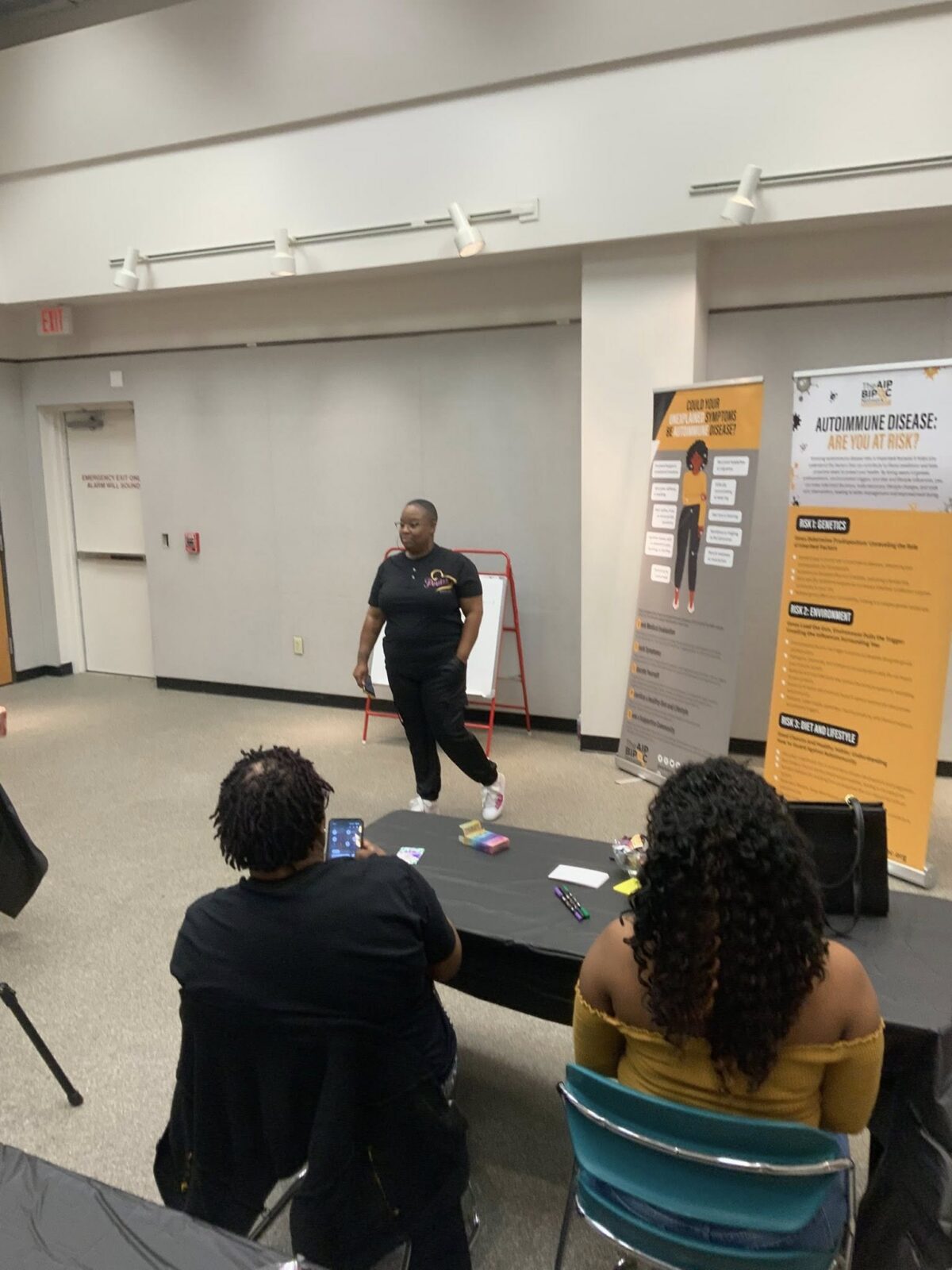
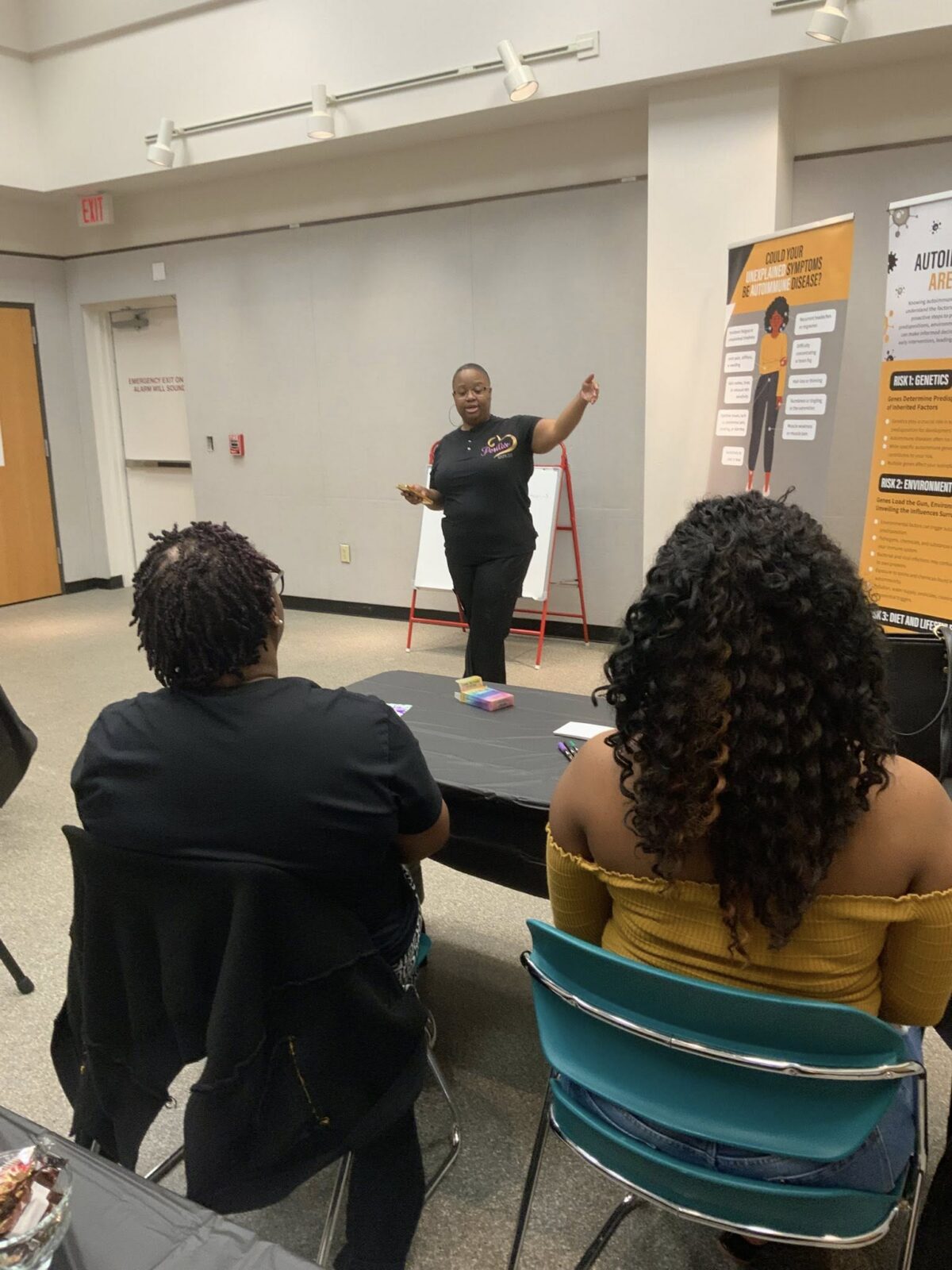
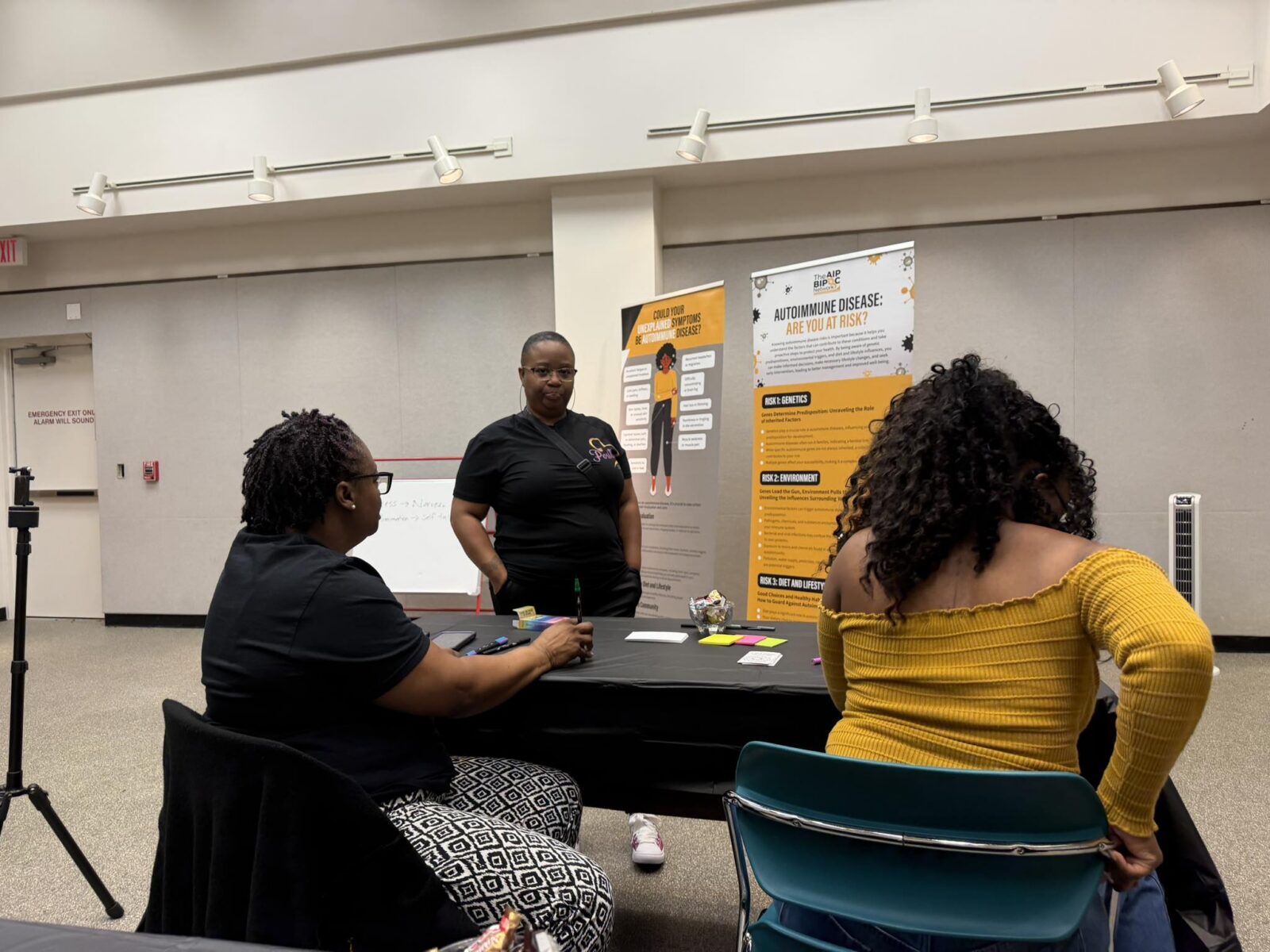
That perspective is also shaped by lived experience. As someone navigating autoimmune disease herself, she brings both professional training and personal understanding into the room. It changes how the work is delivered, not just what is said, but how it is felt and received.
She opened with a core shift that carried through the entire session.
“A flare is not failure. It’s feedback.”
Instead of focusing on symptoms, the conversation began with a shift: a flare is not a personal failure, it is information. That idea reframed how people understood their bodies, moving the room out of blame and into awareness.
The question shifted from “What did I do wrong?” to “What is my body responding to?”
That shift made space to connect what’s happening internally with what shows up physically. Stress, pressure, and negative self-talk do not stay in the mind. They show up in the body and shape how it responds over time.
Through grounding and breathwork, a simple anchor was introduced: “I am safe in this moment.” Something people could return to in real time, not just in theory.
The Love Lens built on that. Notice how you speak to yourself during a flare. Compare it to how you would speak to someone you love. Then begin to close that gap.
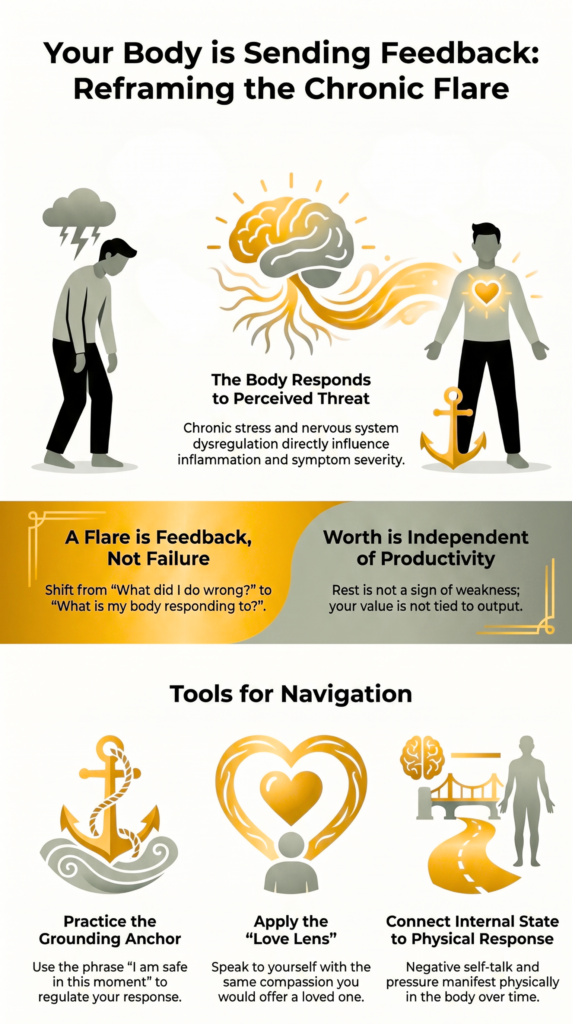
The message was consistent and clear. Your body is not the enemy. Rest is not weakness. Your worth is not tied to what you produce.
This aligns with what we know from trauma-informed care: the body responds to perceived threat, not just physical triggers. Chronic stress and nervous system dysregulation can directly influence inflammation and symptom severity.
From Framework to Lived Experience
That foundation led into my story.
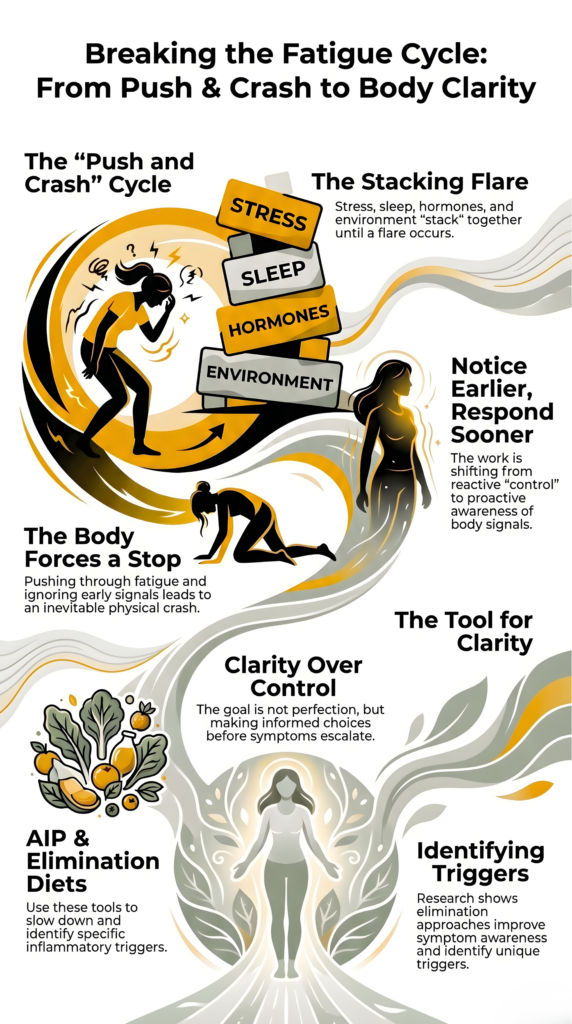
I’ve lived the push and crash cycle. You push through fatigue, ignore early signals, and then the body forces a stop. You don’t realize the cost until your body forces you to stop.
Over time, patterns become harder to ignore.
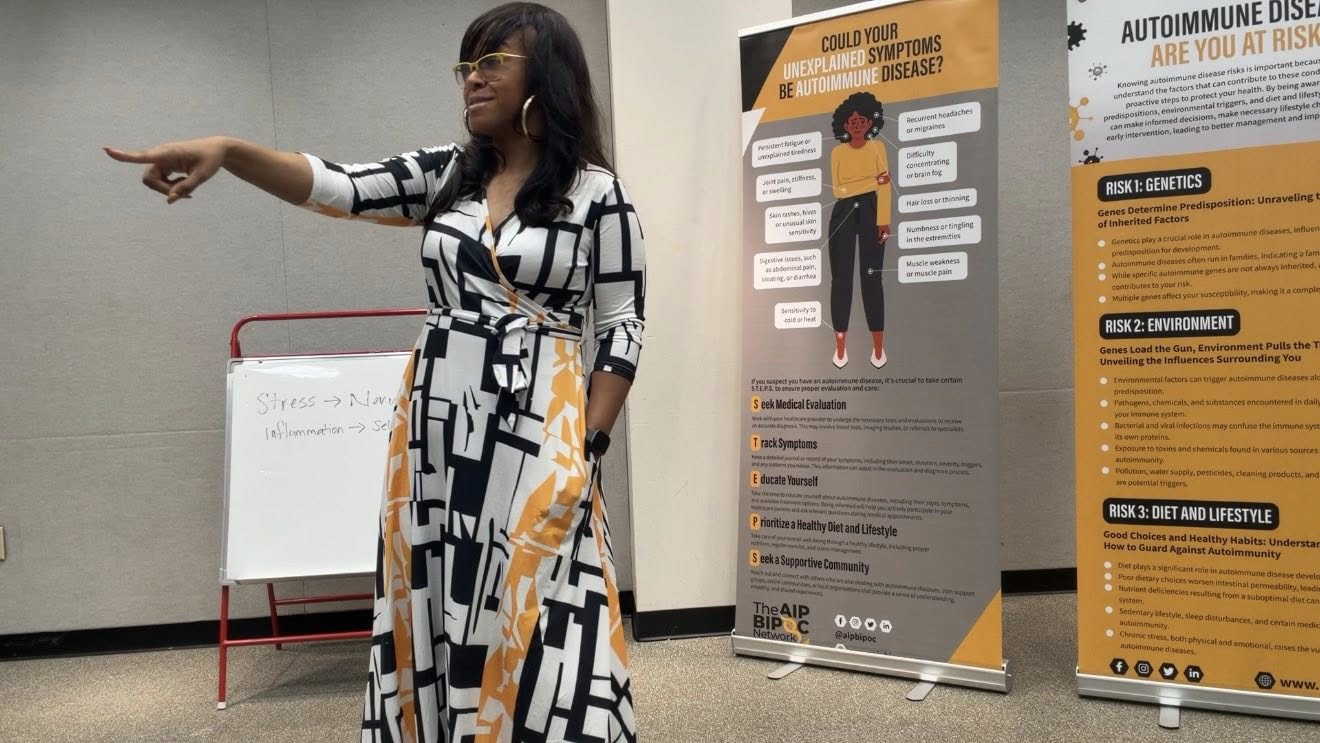
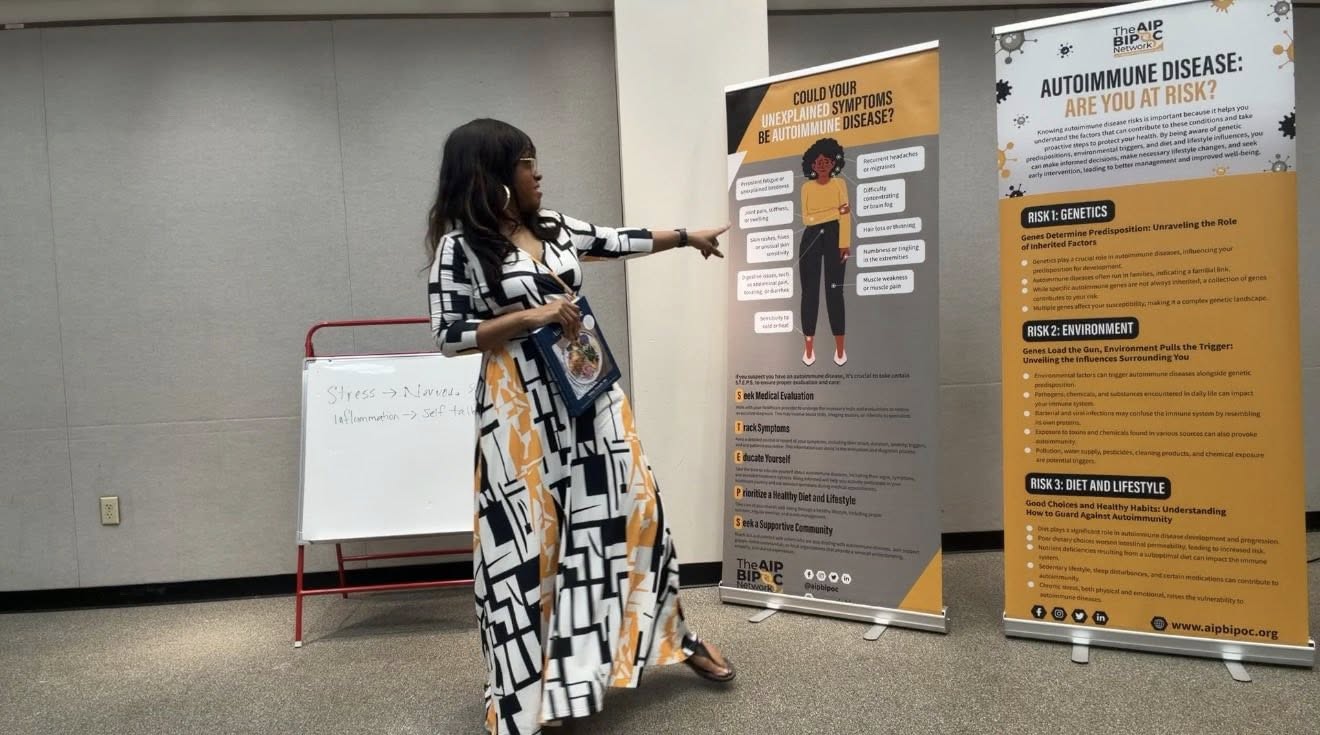
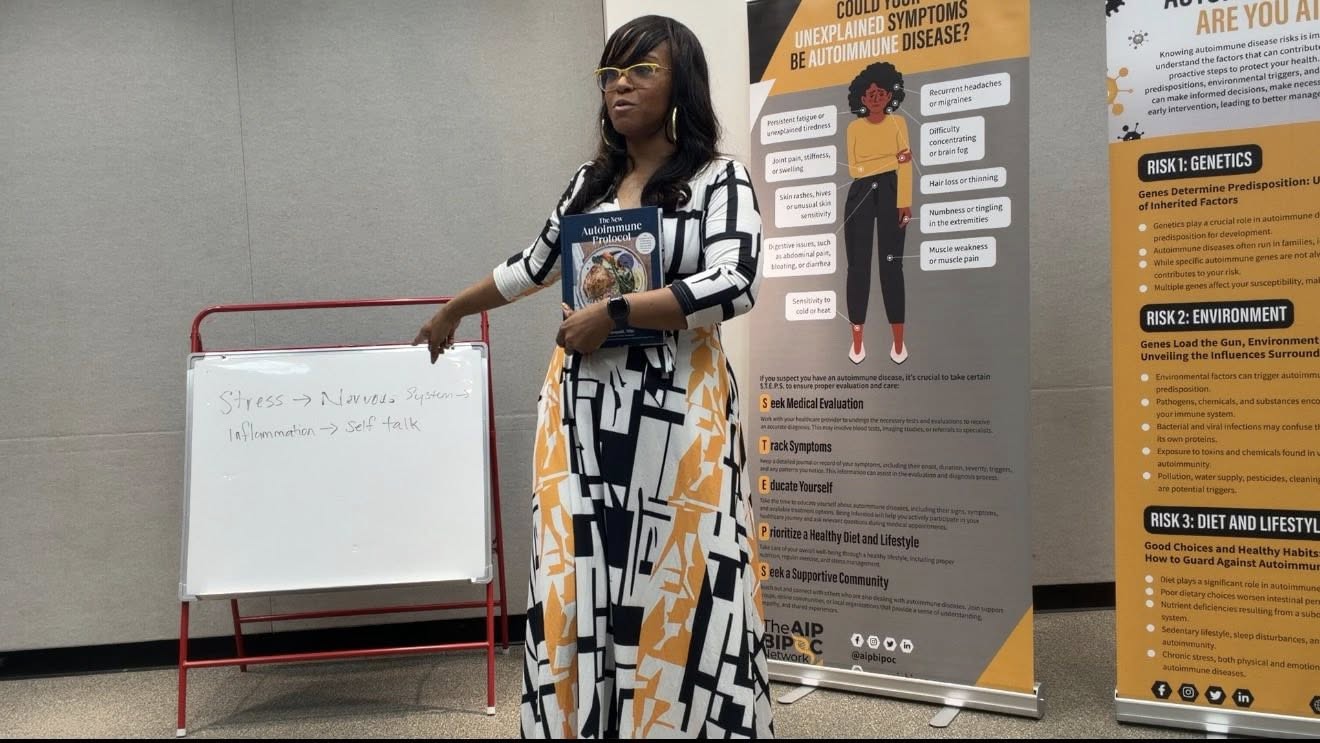
Flares aren’t random. They build. Stress, sleep, hormones, environment, emotional load, it stacks.
The work becomes noticing earlier and responding sooner.
That’s where the Autoimmune Protocol (AIP) and elimination diets came in. Not as rules to follow forever, but as tools to help me understand what was actually happening in my body.
That’s where the Autoimmune Protocol (AIP) and elimination diets came in. Not as rules to follow forever, but as tools to help me understand what was actually happening in my body.
I needed to see the patterns.
What was adding to the load. What was helping me stabilize.
It shifted how I approached everything. Not trying to control my body, but learning how to respond to it.
The goal wasn’t perfection. It was catching things earlier, before they turned into something bigger.
That’s what I brought into the room.
Research supports this approach for some people. Elimination frameworks like AIP can help identify inflammatory triggers and improve symptom awareness over time. Not a cure, but a tool for understanding patterns and making more informed decisions.
Why Being in the Room Matters
This wasn’t just information. It was shared understanding.
Being in the room meant not having to explain your experience. People understood without translation, and lived experience was centered from the start.
You could see it in real time. Heads nodding. People sitting back, realizing they weren’t the only ones navigating this.
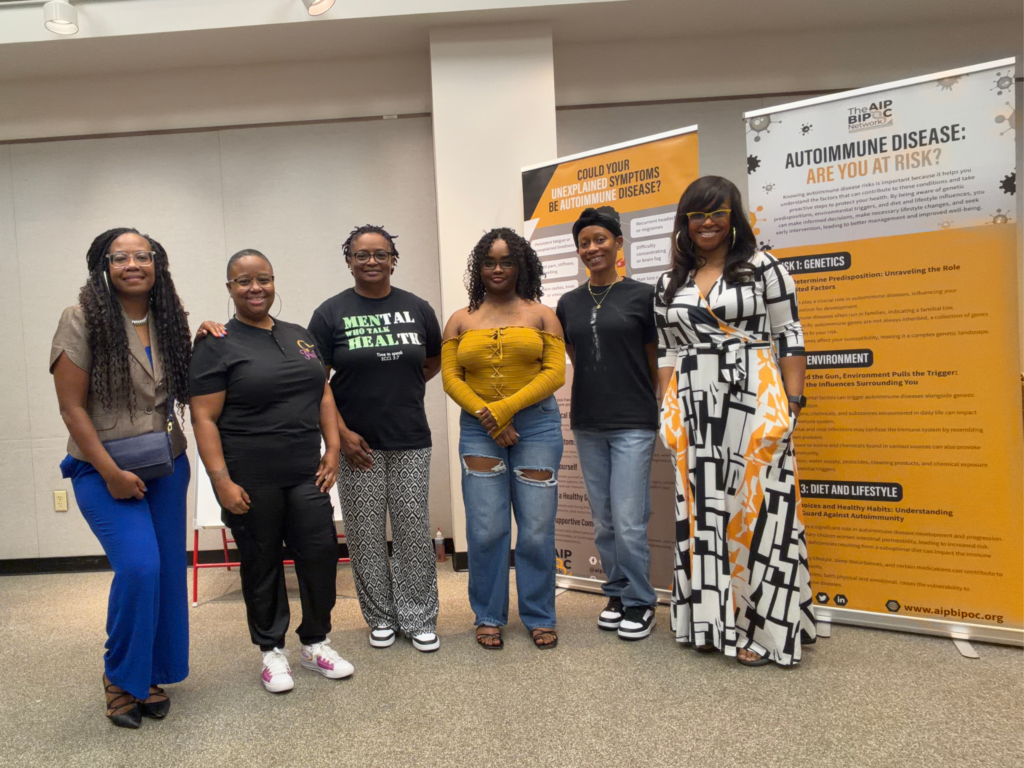
You could see that shift in how people were processing what they had just learned and what they were noticing about their own bodies.
That showed up clearly in what people shared after the session.
🟡 “Very knowledgeable and informative.”
🟡 “Helped me understand symptoms, root causes, and triggers.”
🟡 “I learned so many things I didn’t have a clue about.”
These responses point to something specific: people left with more clarity about their symptoms, a better understanding of what might be driving them, and language to describe what they’re experiencing.
That matters, because clarity changes how illness is processed. It reduces isolation and makes it easier to recognize patterns you might miss on your own.
It also shows why collaboration matters.
Positive Express brought a trauma-informed lens. The AIP BIPOC Network brought lived experience and community context.
Together, it created something more complete, where education, experience, and support all met in one place.
Closing the Loop
What was shared in that room connects back to where this started.
The push and crash cycle. The pressure to keep going. The belief that worth is tied to what you can produce.
This work interrupts that.
It shifts how we understand flares, not as failure, but as information. It shifts how we respond, not waiting until the body forces a stop, but recognizing patterns earlier. And it separates worth from performance, especially in spaces where we’ve been taught the opposite.
That is what Worthy Beyond the Flare was about.
Not adding more to manage. Not chasing perfection. But building awareness, making different choices sooner, and breaking cycles that keep people stuck.
If you see yourself in any part of this, you didn’t have to be in that room for this to apply to you.
You are worthy beyond the flare
If this resonates, stay connected. Join the community, attend an upcoming session, or explore more About us, Our Approach and Our Programs.
Frequently Asked Questions
What is an autoimmune flare?
A flare is a period when symptoms intensify or become more active. It is the body responding to internal or external stressors, not failing.
What triggers autoimmune flares?
Flares are usually influenced by multiple factors working together, including stress, lack of sleep, hormonal shifts, environmental exposures, and emotional load.
Can you have flare symptoms without a diagnosis?
Yes. Many people experience flare-like patterns before receiving a formal diagnosis. These patterns should be taken seriously and evaluated by a healthcare provider.
Why are autoimmune diseases often misunderstood?
Symptoms vary widely and are often invisible. Many people, especially in under-resourced communities, experience delayed diagnoses and are dismissed in healthcare settings.
What is the push and crash cycle?
It is a pattern of pushing through symptoms, ignoring early warning signs, and then experiencing a more severe flare that requires longer recovery.
What is the Autoimmune Protocol (AIP)?
The Autoimmune Protocol (AIP) is a structured elimination and reintroduction approach designed to help identify foods and lifestyle factors that may trigger symptoms. It focuses on removing common inflammatory triggers for a period of time, then gradually reintroducing them to observe how your body responds. AIP is not a cure or a permanent diet. It’s a tool to build awareness, reduce symptom burden for some people, and support more informed, individualized choices over time.

Leave a Reply


Programs Overview
Past Events
ROCK Weekend
Upcoming Events
Blog
Resource Hub
Sponsor
Volunteer
Partner with Us
Ways to Support
Share Your Story
Join Our Network
Our Impact
Why BIPOC?
Our Approach
Who We Are
Common Questions
Community Care Collaborative
ROCK it Wellness
The AIP BIPOC Community
The AIP BIPOC Roundtable
Powering Advocacy
© 2026 The AIP BIPOC Network, INc | EIN # 92-2526059 | all rights reserved | legal