

Programs Overview
Past Events
ROCK Weekend
Upcoming Events
Blog
Resource Hub
Sponsor
Volunteer
Partner with Us
Ways to Support
Share Your Story
Join Our Network
Our Impact
Why BIPOC?
Our Approach
Who We Are
Common Questions
Community Care Collaborative
ROCK it Wellness
The AIP BIPOC Community
The AIP BIPOC Roundtable
Powering Advocacy
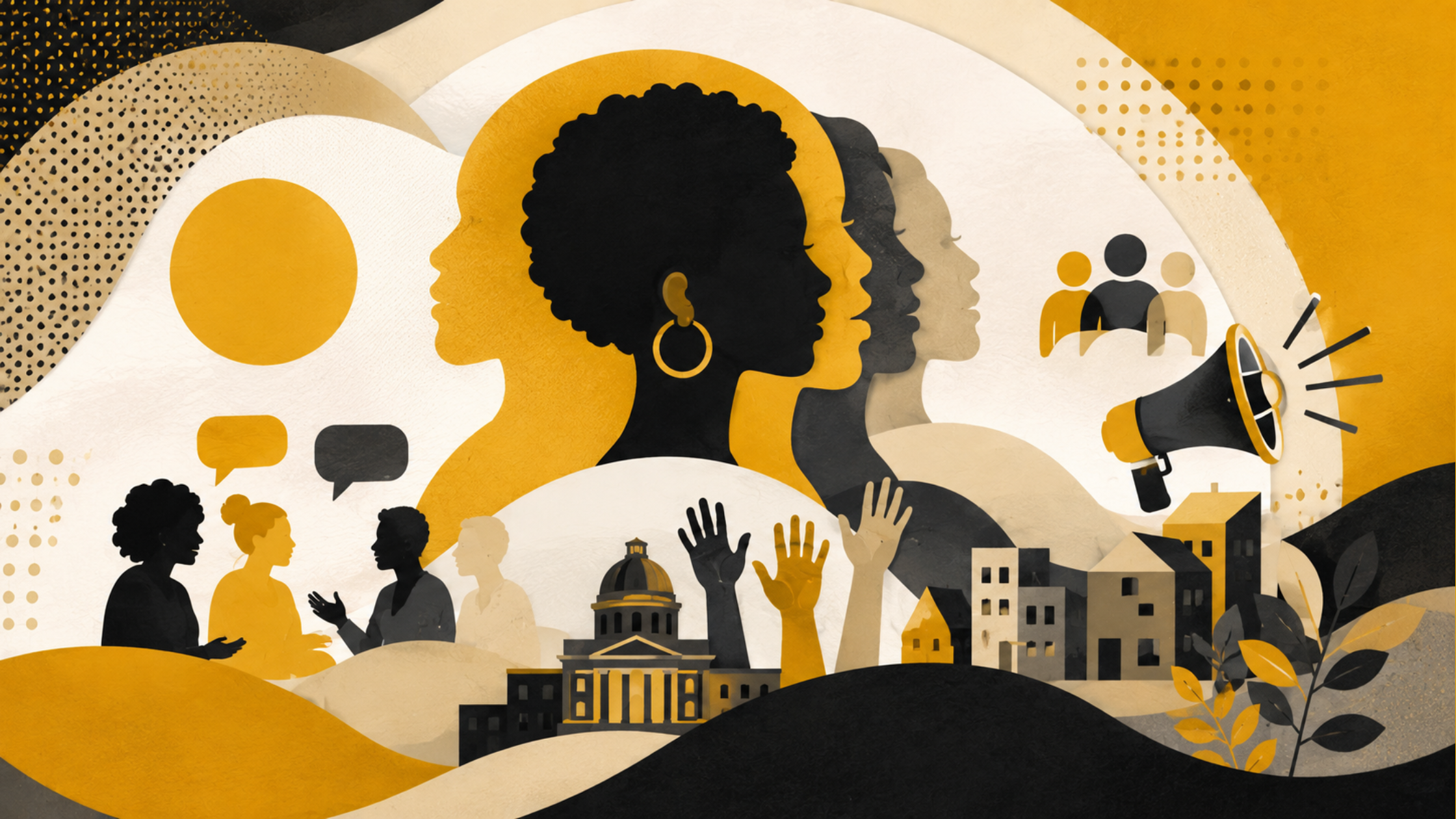

Health is personal, but many of the systems that shape our health are not.
Healthcare coverage. Prescription drug affordability. Disability protections. Research funding. Transportation. Food access. Housing. Environmental conditions. Community health resources.
Decisions about these issues can affect whether people are able to access care, afford treatment, manage chronic conditions, and maintain their quality of life.
That connection is at the heart of Civic Health Month, recognized each August to highlight the relationship between civic participation and health.
For The AIP BIPOC Network (ABN), it also reinforces something central to our advocacy work: advocacy does not start or end at the doctor’s office. Our voices, experiences, and participation matter in the systems that shape our health.
Key Takeaways
- August is Civic Health Month, highlighting the connection between civic participation and health.
- Public policies and community decisions influence many of the conditions that affect health and healthcare.
- Civic engagement includes voting, advocacy, community participation, public comment, and sharing lived experiences.
- People living with autoimmune disease and chronic illness can be directly affected by decisions involving healthcare coverage, medications, disability supports, research, and other public policies.
- ABN provides access to nonpartisan voter resources through Vot-ER and is also part of Civic Health Alliance.
- Civic health is nonpartisan. It is about participation and ensuring communities have opportunities to make their voices heard.
What Is Civic Health Month?
Civic Health Month is observed every August to recognize the connection between civic participation and individual and community health.
Led by Vot-ER, Civic Health Month brings healthcare organizations, community organizations, professional associations, and other partners together around the idea that civic engagement has a place in conversations about health.
Where we live, whether nutritious food is accessible, whether transportation is available, what healthcare services are covered, how medications are paid for, and what community resources receive funding can all be influenced by public decisions.
Civic health asks us to consider another question alongside our traditional conversations about healthcare:
Do people have meaningful opportunities to participate in the decisions affecting their health and their communities?
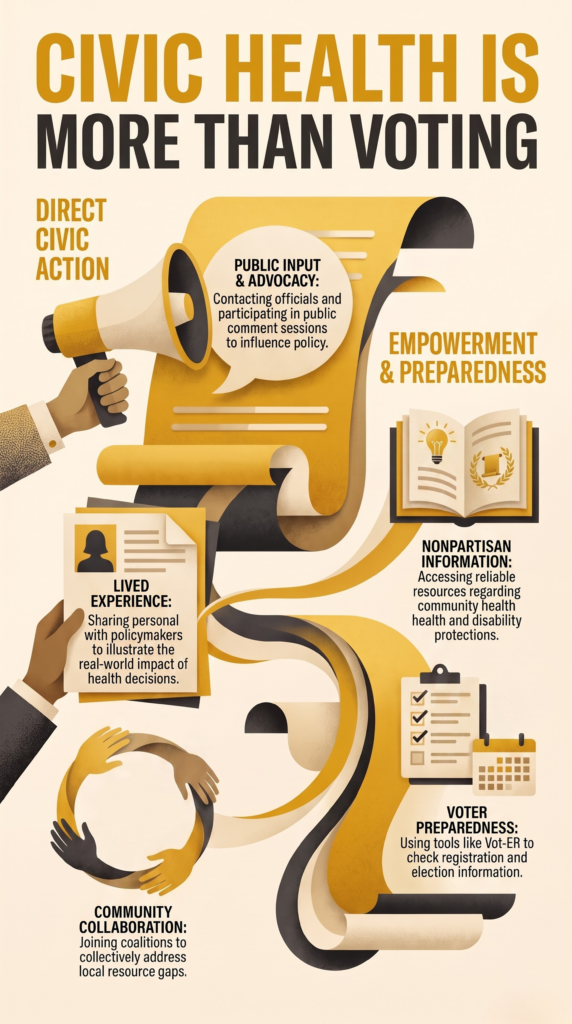
Civic Health Is About More Than Voting
Voting is an important part of civic health, but civic engagement is much broader.
It can include:
- Registering and voting
- Learning about issues affecting your community
- Contacting elected officials
- Participating in public meetings and listening sessions
- Responding to public comment opportunities
- Joining community organizations and coalitions
- Participating in advocacy
- Sharing lived experiences with policymakers and researchers
- Helping others access reliable, nonpartisan civic information
Not everyone will participate in the same way.
Someone managing chronic illness, disability, caregiving responsibilities, work, or other demands may engage differently from someone else. Civic participation should not be measured by one activity alone.
What matters is that people have opportunities to understand the issues, participate when and how they can, and make their voices heard.
Why Is Civic Engagement a Health Issue?
Many of the conditions that shape our health are influenced by decisions made outside the doctor’s office.
Public policies can affect healthcare coverage, prescription drug affordability, disability services, research funding, transportation, food access, housing, environmental conditions, and community resources.
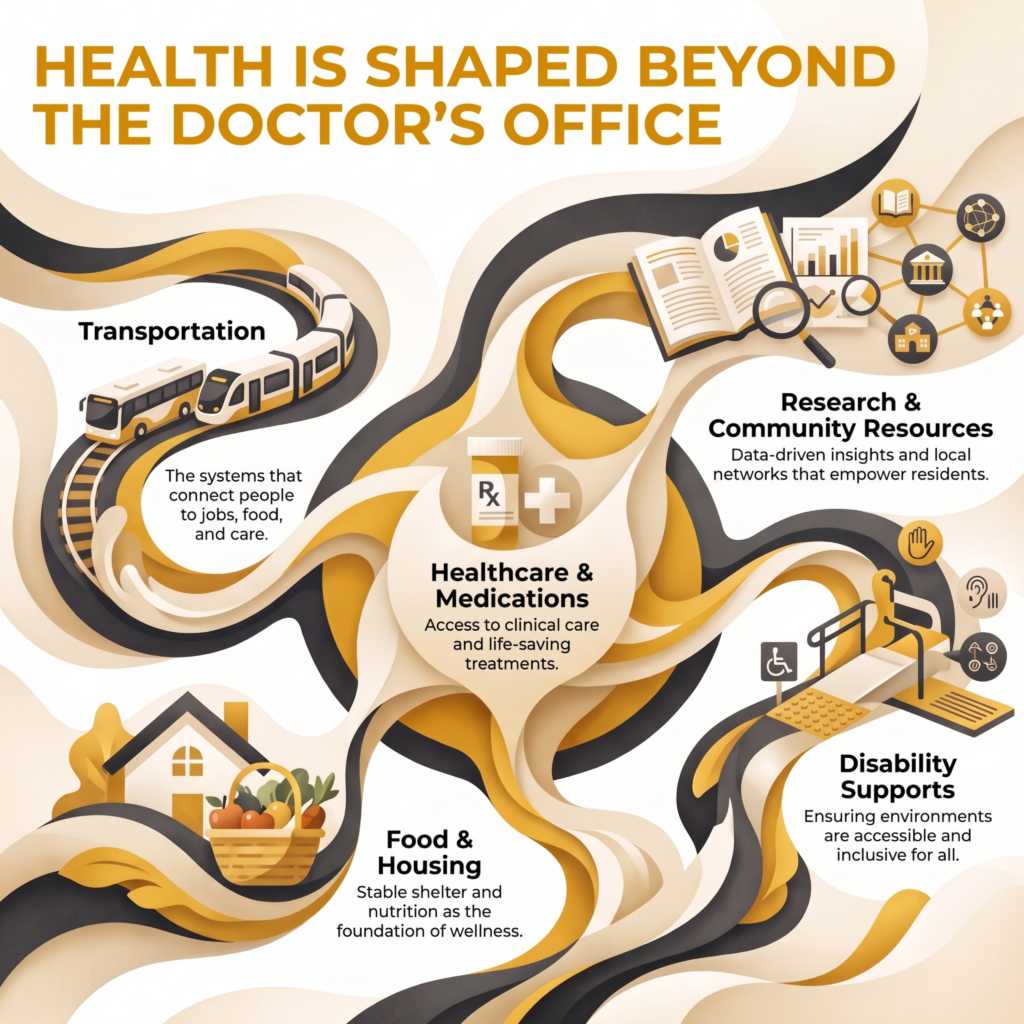
These decisions can influence whether people are able to access care, afford treatment, and manage their health.
That is what makes civic engagement a health issue. Participating in the decisions that shape our communities gives people another way to advocate for the conditions that support healthier lives.
Why Civic Health Matters for Autoimmune Disease and Chronic Illness
People living with chronic conditions often interact with healthcare and public systems repeatedly, sometimes for decades.
They may navigate specialist shortages, insurance requirements, prior authorizations, medication costs, disability systems, workplace accommodations, transportation challenges, and gaps in community resources.
Those experiences provide valuable information about where systems work and where they fall short.
Civic engagement creates opportunities to bring those experiences into larger conversations.
That could mean voting in an election. It could also mean submitting a public comment on a proposed healthcare policy, participating in an advocacy campaign, attending a community meeting, contacting an elected official, participating in research, or sharing a personal story to help decision-makers understand the real-world impact of a policy.
Lived experience is valuable knowledge.
The people most affected by health decisions should have opportunities to be part of the conversations surrounding them.
ABN, Vot-ER, and Getting Vote Ready
ABN has already begun incorporating nonpartisan civic engagement resources into our Powering Advocacy work.
Through Vot-ER, ABN provides our community with access to tools that can help eligible voters:
- Check their voter registration
- Register to vote or update their information
- Find election information
- Locate voting resources
- Prepare to vote
Vot-ER is a national, nonpartisan organization working to integrate civic engagement into healthcare and health-related settings.
For ABN, providing these resources is not about telling anyone who to vote for.
It is about helping people have access to the information they need to participate.
Advocacy does not start or end at the doctor’s office. It includes using your voice, your vote, and your influence.
ABN and Civic Health Alliance
ABN is also part of Civic Health Alliance, connecting our organization to a broader community working at the intersection of health and civic participation.
Through this connection, ABN has access to resources, learning opportunities, and relationships that can strengthen our understanding of civic health and support our broader advocacy efforts.
Participation in Civic Health Alliance complements ABN’s work to help communities understand how their voices and lived experiences can contribute to the decisions and systems that shape health.
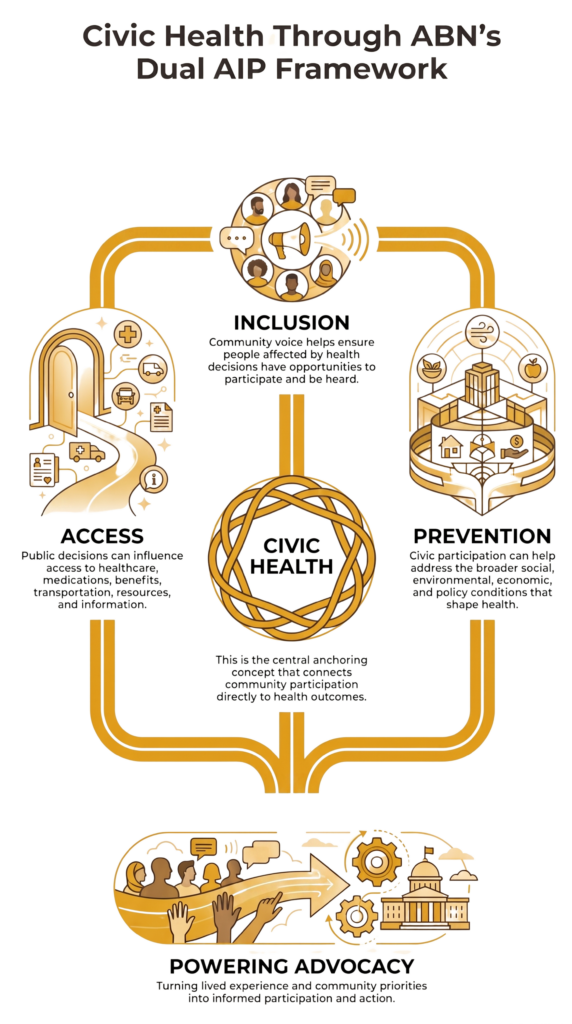
How Civic Health Connects to ABN’s Dual AIP Framework
ABN approaches health through a dual AIP framework: the Autoimmune Protocol and Access, Inclusion, and Prevention.
Civic health connects particularly closely with Access, Inclusion, and Prevention.
Access
Access is not limited to getting through the door of a doctor’s office.
Policies and systems can influence access to healthcare coverage, specialists, medications, disability benefits, transportation, nutritious food, community programs, and reliable health information.
Understanding and engaging with those systems is part of addressing access.
Inclusion
People affected by health policies should have opportunities to participate in the conversations shaping them.
That includes communities whose experiences have historically been overlooked in healthcare, research, policy, and advocacy.
Civic health provides another pathway for bringing those perspectives forward.
Prevention
Prevention also requires looking upstream.
Social, environmental, economic, and policy conditions can contribute to health disparities long before someone reaches a healthcare crisis.
Addressing those conditions requires both individual action and systems-level change.
Civic health also puts ABN’s Advocacy pillar into practice. Through Powering Advocacy, we help people move from understanding the systems that affect their health to recognizing meaningful ways they can participate, share their experiences, and make their voices heard.
Civic Health Is Nonpartisan
ABN’s civic health work is nonpartisan. As a 501(c)(3) nonprofit organization, we do not endorse candidates or tell people how to vote.
Our role is to help our community understand how civic decisions can affect health, connect people with reliable resources, and encourage informed participation.
You decide what issues matter to you, how you participate, and how you vote.
Your Voice Is Part of Your Health
Civic participation does not have to look the same for everyone.
You can start with the issues that affect you and your community. Learn who makes decisions about those issues. Ask questions. Share your lived experience. Pay attention when policies change. Check your voter registration and learn what is on your ballot.
For people living with autoimmune disease and chronic illness, those experiences can provide important insight into where healthcare and community systems are working and where change is needed.
This Civic Health Month, ABN encourages our community to recognize that our voices are part of how change happens.
Our experiences matter. Our communities should be represented. And the people most affected by health decisions should have opportunities to help shape them.
Get Vote Ready!
Check your voter registration, update your information, find election resources, and prepare to vote using ABN’s nonpartisan Vot-ER resource.
Frequently Asked Questions
What is Civic Health Month?
Civic Health Month is recognized each August to highlight the relationship between civic participation and individual and community health.
What is civic health?
Civic health refers broadly to how people participate in their communities and engage with the institutions and decisions affecting their lives and well-being.
Is civic health just about voting?
No. Voting is one form of civic participation. Civic engagement can also include advocacy, contacting policymakers, attending public meetings, responding to public comments, participating in community organizations and research, and sharing lived experiences.
What does voting have to do with health?
Elected officials and public agencies make decisions that can influence healthcare coverage, prescription drug policies, disability programs, research funding, transportation, housing, food access, environmental conditions, and other factors affecting health.
What is Vot-ER?
Vot-ER is a national, nonpartisan organization that provides tools and programs designed to integrate civic engagement into healthcare and health-related settings.
How is ABN involved with Vot-ER?
ABN provides its community with access to Vot-ER’s nonpartisan voter engagement resources. Through ABN’s voter resource, eligible individuals can check their registration, register or update their information, access election information, and prepare to vote.
What is Civic Health Alliance?
Civic Health Alliance is a nonpartisan coalition working to strengthen the connection between civic participation and health. ABN is part of the alliance, connecting our organization with resources, learning opportunities, and others working at the intersection of health and civic engagement.
Is ABN telling people how to vote?
No. ABN’s civic health activities are nonpartisan. We provide information and resources that help people participate and make their own informed decisions.
How does civic health connect to ABN’s mission?
Civic health aligns with ABN’s focus on Access, Inclusion, and Prevention by recognizing that policies, systems, and community conditions influence health and that people affected by those decisions should have opportunities to participate in shaping them.
About the AIP BIPOC Network
The AIP BIPOC Network is a nonprofit community health organization working to improve quality of life for people impacted by autoimmune disease and chronic illness, with an emphasis on communities that have historically experienced barriers to healthcare, information, and resources.
Through our dual AIP framework, Autoimmune Protocol + Access, Inclusion, Prevention, and our five pillars of Awareness, Advocacy, Action, Assessment, and Alignment, ABN connects health education, community engagement, wellness, resource access, advocacy, and partnerships to address individual needs and the broader conditions that influence health.

Jamie Nicole is the founder and CEO of The AIP BIPOC Network and The Natural HEALing Coach, LLC. She is a patient advocate, speaker, certified health coach, fitness instructor, and guest host of the Arthritis Foundation’s Live Yes! With Arthritis podcast. She also serves as Board Secretary for Bee Busy Wellness Center, a Federally Qualified Health Center, and as a member of the Project Sleep Advisory Board.
Drawing from her professional experience and lived experience with Hashimoto’s thyroiditis, rheumatoid arthritis, osteoarthritis, narcolepsy, and asthma, Jamie works to improve quality of life for people navigating autoimmune disease and chronic illness. Her work centers community health education, wellness, advocacy, patient engagement, strategic partnerships, and the inclusion of lived experience in healthcare and research.
Leave a Reply


Programs Overview
Past Events
ROCK Weekend
Upcoming Events
Blog
Resource Hub
Sponsor
Volunteer
Partner with Us
Ways to Support
Share Your Story
Join Our Network
Our Impact
Why BIPOC?
Our Approach
Who We Are
Common Questions
Community Care Collaborative
ROCK it Wellness
The AIP BIPOC Community
The AIP BIPOC Roundtable
Powering Advocacy
© 2026 The AIP BIPOC Network, INc | EIN # 92-2526059 | all rights reserved | legal